
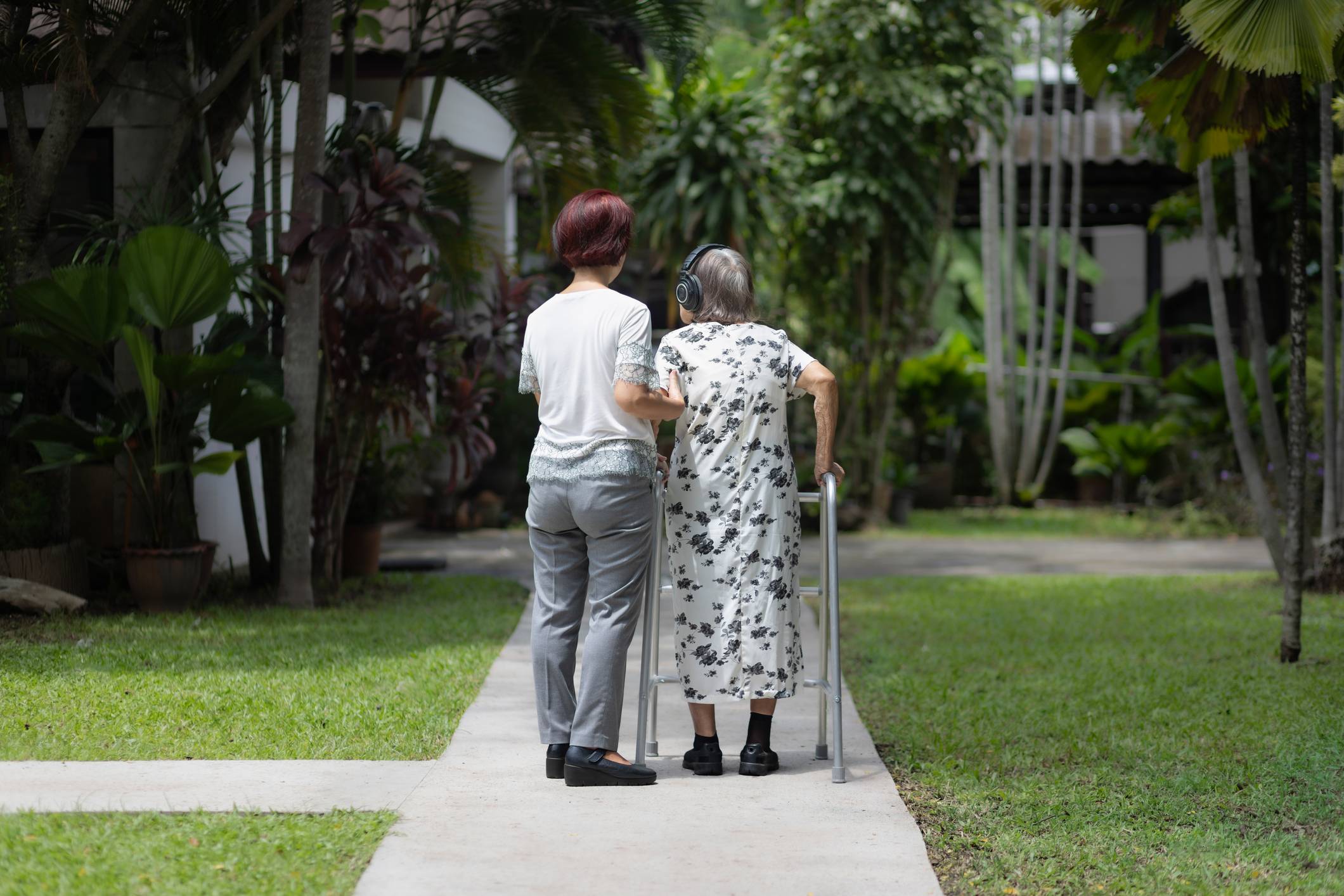
Exercise can have profound positive effects on physical, mental, and emotional well-being. Physical activity is a powerful lifestyle tool for people of all ages, from reducing the risk of illness to facilitating new social connections and improving self-confidence.
While we’ll cover some of the key benefits of exercise for seniors in this blog post, we understand physical activity isn’t always accessible for those with cognitive impairments like Alzheimer’s. Therefore, we’ll also discuss the little things family caregivers can do with their loved one to help them get moving in small, more realistic ways.
How Do Seniors with Dementia Benefit from Exercise?
- Cognitively. Physical activity can improve independent functioning in seniors with dementia, according to 2020 research.1 Alzheimer’s Society also suggests that improving blood (and therefore nutrient) supply to the brain through physical activity could help with memory and thinking.2
- Physically. Seniors (including seniors with dementia) can enjoy various physical benefits from exercise. These include improved heart health, better fitness (potentially reducing fall risk), stronger bones, and a reduced risk of stroke and type 2 diabetes.2
- Psychologically. Research has found that exercise can improve the psychological health of seniors with dementia.1 It may also effectively boost self-esteem, mood, and sleep quality.2
What Common Barriers Prevent Seniors from Exercising?
Seniors may face a range of issues that prevent them from taking part in a regular exercise regime, for example:
- Chronic health conditions (e.g., a heart condition or diabetes).
- Poor mobility or joint pain (perhaps due to arthritis).
- Anxiety or self-consciousness (e.g., fear of getting injured).
- Lack of motivation or social support.
What Additional Barriers Do Seniors with Dementia Face?
Older adults with neurocognitive conditions like Alzheimer’s often face additional obstacles preventing them from engaging in exercise. For example, popular physical activities like walking may be unsafe if a senior is prone to getting lost or forgetting routes. Issues like anxiety can also be worsened by Alzheimer’s disease and other dementia-causing conditions, like vascular or Lewy body dementia.
When interviewing seniors living with dementia, a 2021 study3 found that barriers to exercise included unpleasant sensations while exercising, being unable to remember exercises, lack of perceived opportunities to exercise, fear of being ‘locked up’, aversion to group-based activities, and fear of negative judgement from society.
What Small Things Can You Do to Help Your Relative Exercise?
Studies like the above show that exercise can be challenging for seniors with dementia. And if you’re the family caregiver of a senior with Alzheimer’s, you also likely have a lot on your plate (e.g., work, family life, and self-care). With all this considered, engaging your relative in an exercise plan may simply not be realistic.
If you’re short on time, or if your loved one’s condition means they’re less able to exercise, here are a few little things you could try at home to make a difference:
- If it’s safe, ask your loved one to help with household chores like carrying shopping bags, making the beds, or cooking. Not only does this encourage light physical activity, but it can also help them feel empowered and valuable.4
- Do gentle stretches or a chair yoga routine together during ad breaks when watching TV.4
- If they have a garden, invite them to help you plant flowers, prune, or do some weeding. 4 The amount they do can be tailored based on their physical and cognitive abilities. Being outdoors can also promote nature connection, opening the door to even more physical and mental health benefits, including better mood, higher motivation,5 and increased vitamin D intake.
Signs Residential Memory Care in Skilled Nursing Can Help
Supporting a loved one with Alzheimer’s disease can be incredibly tough, and it’s simply not always possible to successfully engage them in exercise. Their behavioral issues or physical health conditions might make it unsafe, or you may not have the spare time among many commitments.
If any of the following also apply,6 it may be worth researching skilled nursing residential memory care in Queens:
- Your relative can’t perform activities of daily living (ADLs) independently, and you’re unable to support them safely. A lack of ADL support can result in issues like incontinence, poor hygiene, falls, malnutrition, and caregiver burnout.
- Their behavior is becoming challenging to manage. Things like irritability, aggression, paranoia and agitation are common in seniors with Alzheimer’s, and can put both them and their family caregivers at risk. Behavioral problems in dementia patients usually have an underlying cause, like confusion, hallucinations, unmet needs they can’t communicate, discomfort, or increased anxiety. Memory care providers are well-trained and experienced in spotting and addressing the underlying need.
- You’re struggling to cope in your role as a family caregiver. Supporting a parent or relative with Alzheimer’s disease or dementia can take a substantial physical, mental, and emotional toll on family caregivers.7/sup> If you’re feeling incredibly overwhelmed, isolated, or unable to take care of your needs and responsibilities, it could be a sign that your relative needs full-time residential memory care.
A great senior care community in Queens offering memory care will allow you to take a step back and breathe safely knowing that dementia care experts are supporting your loved one. Chapin Home has memory care and skilled nursing professionals available 24/7 to meet residents’ needs and engage them in social, recreational, and physical activities they love.
How Can Memory Care Promote Physical Activity?
Encouraging physical activity in a way that’s safe for a senior with dementia isn’t always realistic for family caregivers. However, in senior care, expert staff have the time and expertise to adapt activities to suit residents’ unique needs and tastes. At Chapin Home, memory care residents enjoy meeting their daily exercise needs through customized dementia activities.
They may also enjoy a quiet stroll through our ‘community within a community’ dedicated solely to memory care residents. Seniors can enjoy unrestricted fresh air and outdoor exercise with its secure perimeter. Thanks to our staff-to-resident ratio, residents can receive the skilled nursing and memory care support they need.
Chapin Home: Quality Residential Senior Care in Queens
Chapin Home for the Aging has been a staple skilled nursing and assisted living community in Queens for over 155 years. Our dementia caregivers are experts in their field and are committed to helping residents access the tailored support they need to thrive.
To learn how we can enhance your loved one’s mental and physical well-being, schedule a tour of our family-oriented skilled nursing and residential senior care home in Queens today.
References
- Nuzum H, Stickel A, Corona M, Zeller M, Melrose RJ, Wilkins SS. Potential benefits of physical activity in MCI and dementia. Behav Neurol. 2020;2020:7807856. doi: 10.1155/2020/7807856.
- Alzheimer’s Society. Physical activity, movement, and exercise for people with dementia. Accessed June 17, 2024. https://www.alzheimers.org.uk/get-support/daily-living/exercise.
- Gebhard D, Mir E. What moves people living with dementia? Exploring barriers and motivators for physical activity perceived by people living with dementia in care homes. Qual Health Res. 2021;31(7):1319-1334. doi: 10.1177/10497323211002822.
- Alzheimer’s Society. Exercise types and ideas for people with dementia. Accessed June 17, 2024. https://www.alzheimers.org.uk/get-support/daily-living/exercise/types-ideas#content-start
- Evans SC, Barrett J, Mapes N, et al. Connections with nature for people living with dementia. Working With Older People. 2019;23(456). doi: 10.1108/WWOP-01-2019-0003.
- Lee M. 7 signs it’s time for memory care. Aging Care. Accessed June 17, 2024. https://www.agingcare.com/articles/when-is-it-time-to-place-a-loved-one-with-dementia-188309.htm.
- Alzheimer’s Association. 2024 Alzheimer’s disease facts and figures. Alzheimer’s Dement. 2024;20(5). Accessed June 17, 2024. https://www.alz.org/media/Documents/alzheimers-facts-and-figures.pdf.